
Introduction: Why Is a Certificate of Destruction Important?
Does your business have a proper record of how confidential information and unwanted IT equipment are destroyed? When companies dispose of old computers, hard drives, storage devices, or confidential documents, secure disposal is only one part of the process. Maintaining proper documentation is equally important.
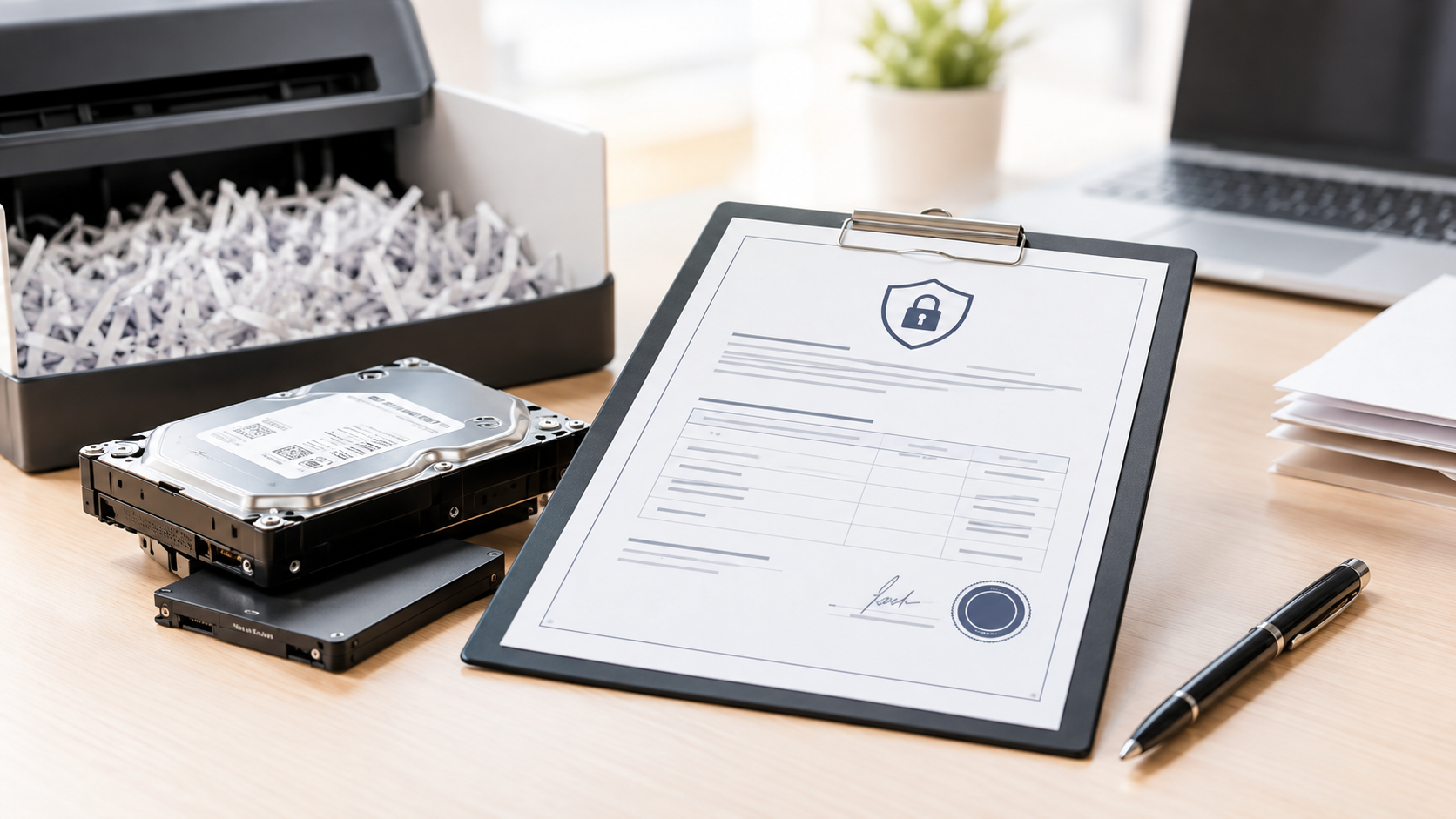
A Template for Certificate of Destruction helps businesses understand how to document the destruction of sensitive information and physical assets. It provides a structured format for recording essential details, including the items destroyed, the date of destruction, the destruction method, and the responsible service provider.
For businesses in Malaysia, South Asia Data Destruction offers professional data destruction solutions designed to help organizations protect sensitive information and manage the disposal of IT assets. Proper destruction records can support internal procedures, security reviews, and audit preparation.
 What Is a Certificate of Destruction?
A Certificate of Destruction is a document that records the destruction of specified items, materials, or information. It provides written confirmation that a destruction process has been completed according to the service arrangement and the details stated in the certificate.
Businesses commonly use destruction certificates when disposing of hard disk drives, solid-state drives, computers, storage devices, and confidential documents. Depending on the service, a certificate may also identify the relevant equipment or provide details about the destruction process.
A well-organized certificate helps a company maintain a clear record of its disposal activities. It can also help the relevant departments confirm which assets were destroyed and when the work took place.
However, a certificate should accurately reflect the service performed. It should not claim that data was securely erased or physically destroyed unless the corresponding process was actually completed and verified.
What Should a Template for Certificate of Destruction Include?
A useful Template for Certificate of Destruction should contain the information necessary to identify the items and document the completed work. The exact fields may vary depending on the organization’s requirements and the type of destruction service provided.
1. Certificate Reference Number
Each certificate should have a unique reference number. This makes it easier for businesses to retrieve the document when conducting an internal review or checking historical disposal records.
2. Client and Company Information
Include the client’s business name, relevant department, contact information, and the service provider’s details. These details help establish which parties were involved in the destruction process.
3. Description of Items Destroyed
The certificate should identify the materials or assets covered by the service. For IT equipment, this may include hard drives, SSDs, laptops, desktop computers, servers, or other storage devices.
Where applicable, record asset tags, serial numbers, quantities, or other identifiers. Accurate identification reduces confusion and helps organizations reconcile destroyed assets against their inventory records.
4. Date and Location of Destruction
Record the date on which destruction took place and the relevant location. If collection occurred on a different date, businesses may also maintain a separate collection record to establish a clearer timeline.
5. Destruction Method
Describe the method used, such as physical shredding or an appropriate data sanitization process. The method should match the service actually performed and the type of media involved.
6. Authorized Confirmation
Include the name, role, and authorized signature or other approved confirmation from the responsible party. This helps establish who issued or approved the certificate.
7. Supporting Documentation
Depending on the service, supporting records may include an asset inventory, collection receipt, serial-number report, or chain-of-custody documentation. These records can provide additional information when a business needs to verify its disposal history.
How South Asia Data Destruction Helps Businesses Protect Sensitive Information
South Asia Data Destruction supports organizations seeking professional solutions for managing confidential information and end-of-life IT equipment. Businesses can use appropriate destruction services to reduce the risk of sensitive data remaining accessible after devices are retired.
Hard Drive and SSD Destruction
Hard drives and solid-state drives may contain business documents, customer information, employee records, financial data, and other confidential files. Simply deleting files or formatting a device does not necessarily provide sufficient protection.
The appropriate disposal method depends on the storage technology, the sensitivity of the information, and the organization’s security requirements. Physical destruction may be suitable when a storage device is no longer required and must not be reused.
For SSDs in particular, conventional hard-drive destruction assumptions may not apply because flash storage uses a different underlying technology. Businesses should select a method appropriate to the media involved.
Secure Data Erasure
Some organizations need to reuse, resell, or redeploy their IT equipment rather than physically destroy it. In these cases, an appropriate data sanitization process may be considered.
Data erasure aims to make stored information inaccessible through the methods covered by the selected sanitization process. Businesses should maintain suitable verification records and distinguish data erasure from physical destruction in their documentation.
Confidential Document Shredding
Paper documents can contain personal information, customer details, contracts, financial statements, and internal business records. Secure shredding helps prevent unauthorized access to information that should no longer be retained.
Organizations can maintain records of the documents or batches submitted for destruction, the service date, and the confirmation provided by the service provider.
IT Asset Disposal
IT asset disposal may involve computers, servers, storage devices, and other electronic equipment that has reached the end of its useful life. Before disposal, organizations should identify assets that contain sensitive information and determine the appropriate treatment for each item.
Maintaining an accurate inventory and matching disposal records to the relevant assets can improve traceability throughout the process.
Benefits of Using a Template for Certificate of Destruction
Using a consistent Template for Certificate of Destruction can help businesses establish a more organized approach to managing destroyed assets and confidential materials.
Better Recordkeeping
A standardized template ensures that important details are recorded in a consistent format. Employees do not need to create a new document structure for every disposal activity.
Easier Audit Preparation
When auditors or internal reviewers request evidence of asset disposal, businesses can locate relevant certificates and supporting records more efficiently. The certificate should be retained alongside other documentation required by the organization’s policies.
Improved Asset Tracking
Recording asset tags, serial numbers, and quantities helps companies compare their inventory records with completed destruction activities. This can be particularly useful when dealing with large numbers of computers, hard drives, or storage devices.
Stronger Accountability
Clear documentation identifies the parties involved, the items covered, and the work reported as completed. This can reduce misunderstandings between departments, clients, and service providers.
Better Information Security Management
A destruction certificate contributes to the wider information security process by documenting a disposal activity. It should form part of a broader procedure that includes asset identification, access control, approved destruction methods, and appropriate record retention.
A certificate alone does not guarantee regulatory compliance or prove that every security risk has been eliminated. Businesses should evaluate their full disposal process against applicable laws, contracts, and internal requirements.
Common Mistakes to Avoid When Preparing a Destruction Certificate
Even a well-designed document can become unreliable if important details are missing or inaccurate.
Leaving out asset identifiers: General descriptions such as “old computers” may not be sufficient for organizations that need to track individual devices. Include serial numbers or asset tags where appropriate.
Using unclear destruction descriptions: Avoid vague wording that does not explain what service was completed. Identify the actual method used and the relevant items covered.
Recording incorrect dates: The certificate should show the correct destruction date. Collection and destruction dates should be distinguished when they are different.
Confusing data erasure with physical destruction: These are different processes and should be documented accurately. A certificate must not describe data as physically destroyed when only a sanitization procedure was performed.
Failing to retain supporting records: A certificate may not contain every detail needed for an audit. Keep related inventories, transfer records, and verification documents where appropriate.
Making unsupported compliance claims: Do not state that a certificate automatically guarantees compliance with every applicable regulation. Compliance depends on the complete process and the specific requirements that apply to the business.
How to Organize Your Destruction Documentation
Businesses can improve their disposal procedures by following a consistent documentation workflow.
First, identify the equipment, storage media, or confidential documents scheduled for destruction. Confirm which items require physical destruction and which may be suitable for an approved data sanitization process.
Next, prepare an inventory containing the relevant identifiers and quantities. Keep collection and transfer records where necessary to track the items between the client and the service provider.
After the service is completed, verify that the certificate accurately describes the work performed. Check the destruction date, method, asset details, and authorized confirmation before filing the document.
Finally, store the certificate in an approved location with access limited to authorized personnel. Apply the organization’s record-retention policy and ensure that related documents can be retrieved when required.
A consistent workflow makes it easier for IT teams, security personnel, procurement departments, and compliance staff to manage end-of-life assets.
Why Choose South Asia Data Destruction?
Businesses handling sensitive information need a clear process for protecting data throughout its lifecycle, including when equipment is retired or confidential documents are no longer required.
South Asia Data Destruction provides specialist data destruction solutions in Malaysia for organizations seeking support with secure disposal requirements. Its service offerings include hard drive and SSD destruction, data erasure, and confidential document shredding.
Selecting an appropriate service should involve reviewing the type of information involved, the condition of the equipment, whether the assets need to be reused, and the organization’s security requirements.
Businesses should also confirm the scope of the service, the destruction method, the records supplied, and the arrangements for handling and transferring assets.
Maintaining suitable documentation alongside the destruction service helps organizations create a clearer record of their disposal activities and strengthen their internal asset management procedures.
Conclusion
A Template for Certificate of Destruction is a useful starting point for businesses that want to maintain clear, consistent records when disposing of confidential information and IT assets. By recording the items involved, destruction method, date, and authorized confirmation, organizations can improve traceability and support internal audits.
However, effective information security requires more than a certificate. Businesses should combine accurate documentation with appropriate destruction or sanitization methods, reliable asset tracking, and secure handling procedures.
South Asia Data Destruction helps businesses address their data destruction needs through professional services for storage devices, IT assets, and confidential documents.
Need professional data destruction services in Malaysia?
Contact South Asia Data Destruction to discuss your requirements for hard drive destruction, SSD destruction, secure data erasure, or confidential document shredding.
Need Proof of Secure Disposal? Use This Template for Certificate of Destruction
Need Proof of Secure Disposal? Use This Template for Certificate...
Read More..
Perkhidmatan Pemusnahan Data di Malaysia
Perkhidmatan Pemusnahan Data di Malaysia Mengapa Perkhidmatan Pemusnahan Data Sangat...
Read More..
Are Your Old Devices Still Putting Your Business at Risk? Discover Why Data Destruction Services Matter in 2026
Are Your Old Devices Still Putting Your Business at Risk?...
Read More..
hard drive destruction service malaysia
hard drive destruction service malaysia How to Choose the Right...
Read More..